
Aguán News Alert | October 2025
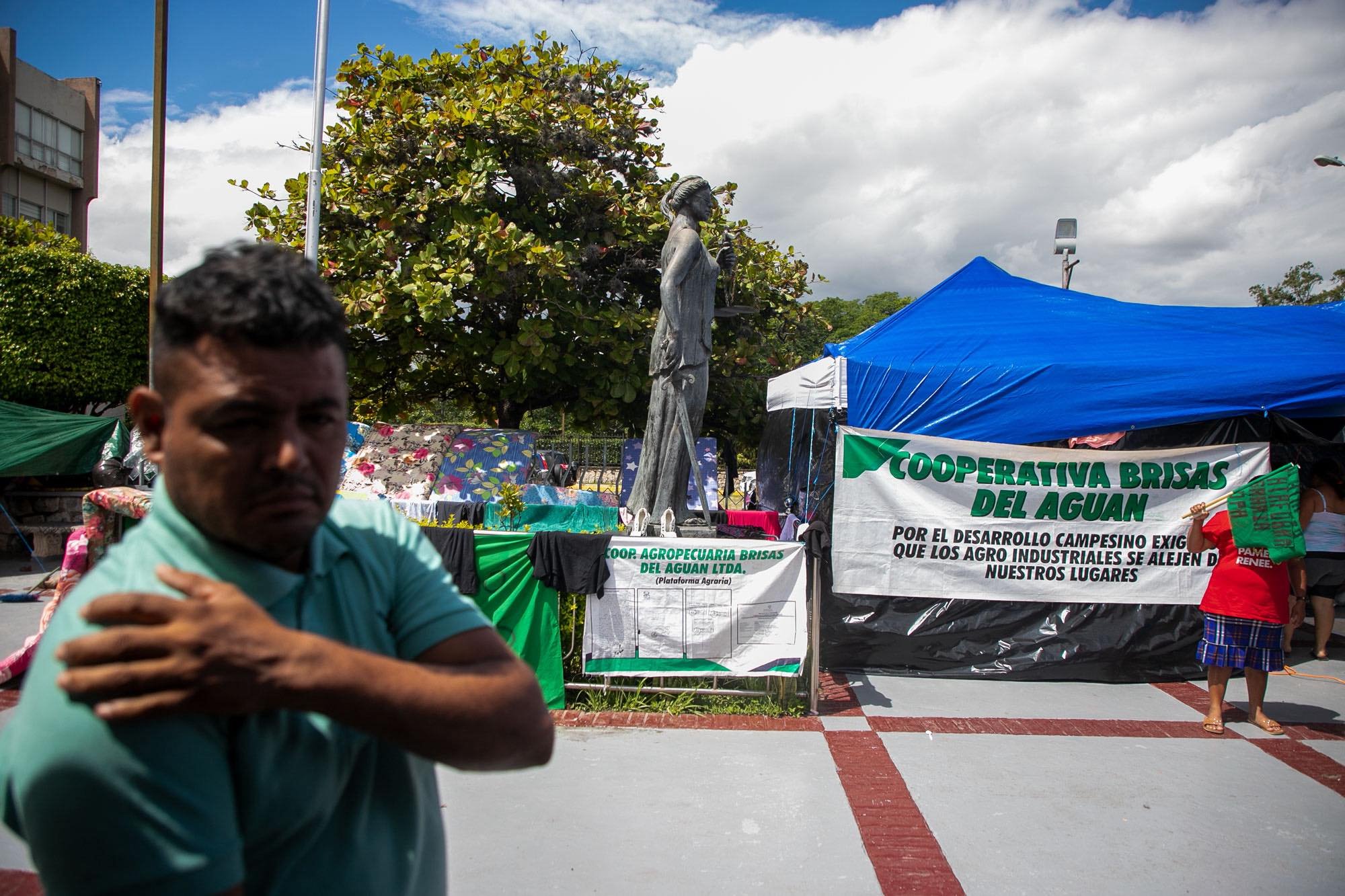
Image Credits: Contracorriente.
Campesinos Demand Justice, Set up Encampment
Tocoa, Colon.- From October 8 to 14, campesinos organized with the Agrarian Platform set up the Encampment for Justice and Land in front of the Supreme Court of Justice (CSJ in Spanish). Their main demand was the eviction of the criminal group known as “Los Cachos” who illegally occupied the land of the Camarones cooperative and forcibly displaced campesino families for months. Despite an eviction order issued in August, the National Police have failed to take action against “Los Cachos.” After six days, the protest ended positively, with the court promising to set a new date for the eviction of the criminal group.
On October 17, a formal indictment was issued against José Gutiérrez Calderón, a suspected member of “Los Cachos,” for the crime of forced displacement. On October 18, Bajo Aguán communities and organizations commemorated the 28th anniversary of the assassination of environmentalist Carlos Escaleras. Before the Public Ministry, the Agrarian Platform denounced the media hate campaign against campesino families as part of a plan by the Dinant Corporation and “Los Cachos” to assassinate campesino leaders.
Encampment for Justice and Land
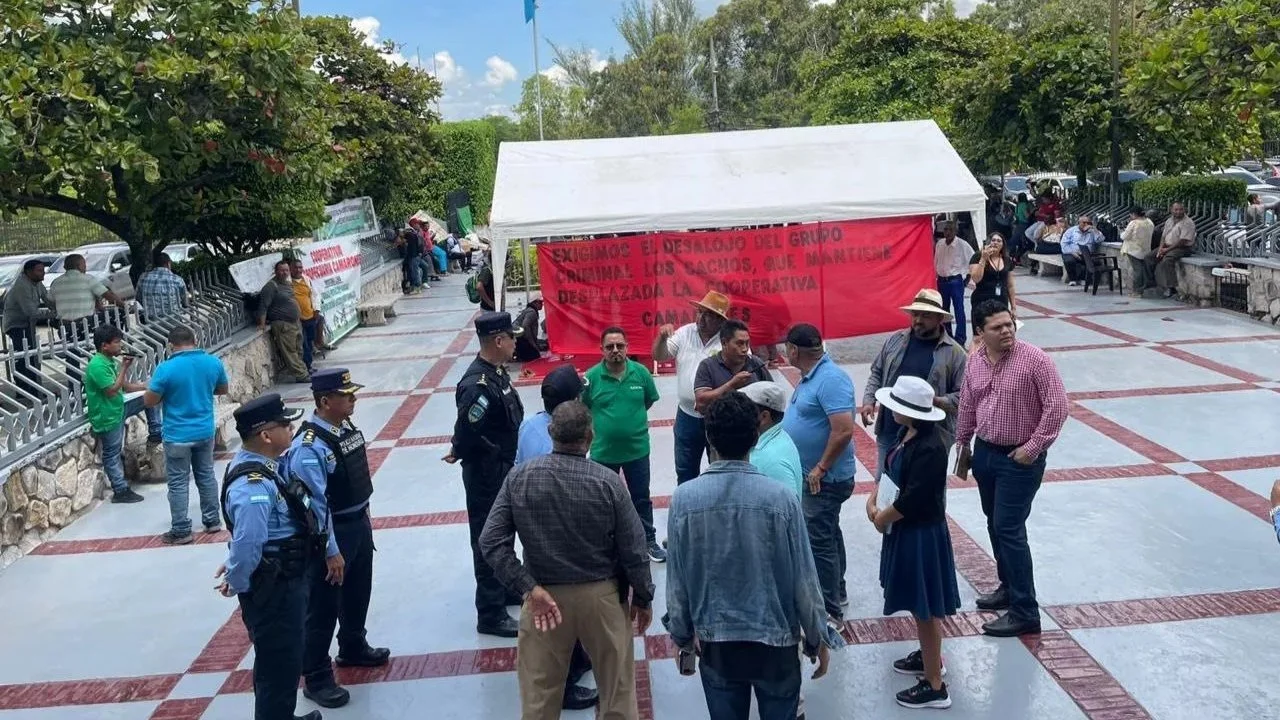
Campesino encampment begins: October 8, campesino families organized with the Agrarian Platform began an encampment outside of the CSJ. They demanded that the state comply with an eviction order issued by the National Court specializing in Organized Crime against the criminal group “Los Cachos.” The members of the encampment had been displaced by “Los Cachos,” and they affirmed that they would remain in front of the CSJ until their right to land was recognized and respected.
Criminal group has illegally occupied the land for months: On December 24, 2024, the criminal group known as “Los Cachos” launched an attack against the Camarones, Tranvío, and Chile cooperatives. The campesino families of the cooperatives were illegally and forcibly evicted from their lands. Eventually, the Tranvío and Chile cooperatives were able to regain access to their land, but “Los Cachos” retained control of the land belonging to the Camarones cooperative. Members of the Camarones cooperative are still illegally displaced. On August 4, 2025, the court ordered the eviction of the members of the criminal group “Los Cachos.” It was later postponed to August 22, but the National Police never completed the order. Police Commissioner Eliazar Varela claimed there were “inconsistencies” in the eviction order. Yoni Rivas, a spokesman for the Agrarian Platform, noted the disparity in how quickly and forcefully the National Police have evicted campesinos from their land in comparison with unfulfilled eviction order against the criminal group.
Campesinos secure an eviction date: On October 14, the CSJ promised to complete the eviction order against the criminal group “Los Cachos.” A commission of magistrates and an advisor to the president of the CSJ will determine the new eviction date. The campesino victory was achieved after six days of the encampment. They persisted under adverse weather conditions. The Agrarian Platform met repeatedly with authorities until an eviction date was promised.
Criminal group linked to the Dinant Corporation: The encampment was dissolved on October 14, but the Agrarian Platform continues to demand full accountability. The organization denounced the Dinant Corporation and Facussé family’s interference in the legal system in favor of the criminal group “Los Cachos.” The Agrarian Platform also called for an immediate investigation into the Dinant Corporation's involvement in the illegal land occupation.
Other News
Member of “Los Cachos” placed in preventative detention: On October 17, the National Court specializing in Organized Crime issued a formal indictment and preventive detention against José Gutiérrez Calderón for the crime of forced displacement. He is the sixth person to be placed in preventative detention in the case. The judge ruled that while there was evidence of the existence of the criminal group “Los Cachos,” he determined that there was not enough evidence to determine that José Gutiérrez Calderón was a member of the group.
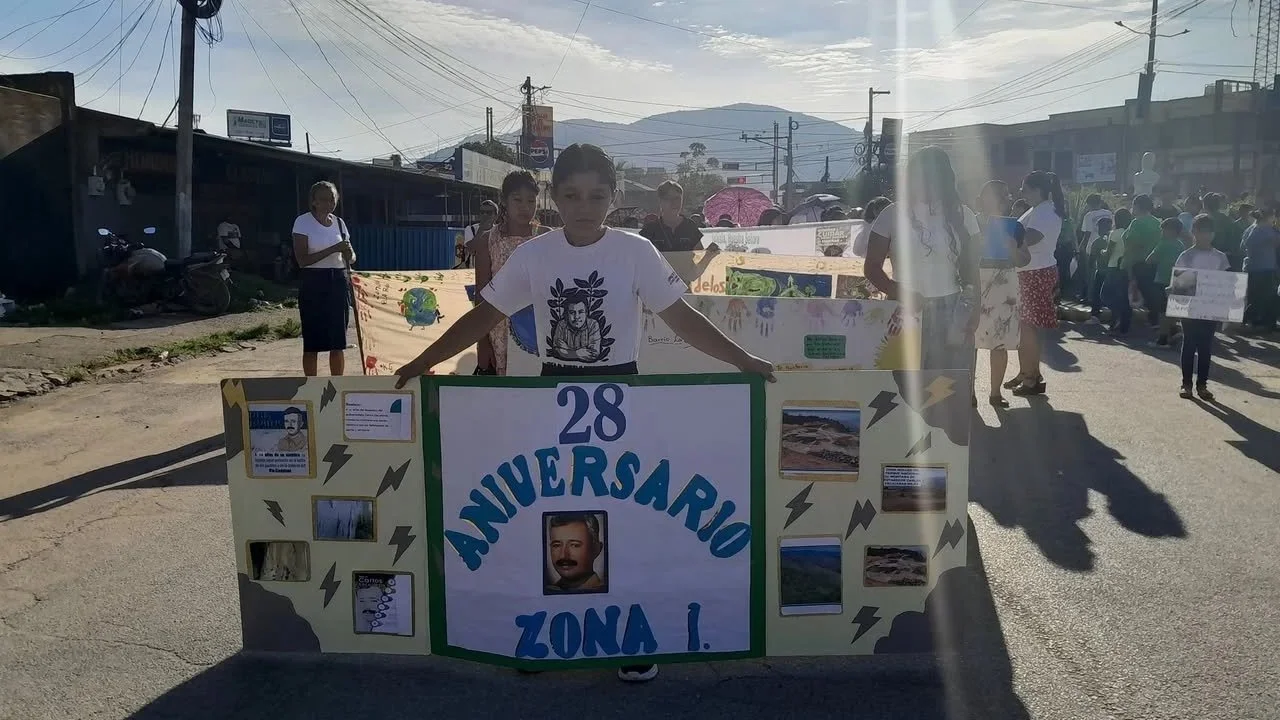
Bajo Aguán organizations remember environmentalist Carlos Escaleras: From October 12 to 18, Bajo Aguán organizations held events commemorating the 28th anniversary of the martyrdom of environmentalist leader Carlos Escaleras. He was assassinated on October 18, 1997. The spokesman for the Agrarian Platform Yoni Rivas explained that the murder of Carlos Escaleras is linked to the Dinant Corporation and the Facussé family.
The Agrarian Platform denounces a media hate campaign: On October 28, before the Public Ministry, the Agrarian Platform denounced the online media hate campaign that has been waged against campesino families of the Camarones, Chile, and Tranvío cooperatives. The hate campaign has defended the criminal group “Los Cachos.” The Agrarian Platform informed the Public Ministry that the Dinant Corporation has financed and supported the campaign. The Dinant Corporation has also employed members of “Los Cachos” to assassinate leaders of the campesino movement. The Agrarian Platform called for investigations into Miguel Mauricio Facussé as the leader of the criminal group and others who have participated in the media hate campaign.
Historical Context
In the 1990’s, World Bank-led structural adjustment measures transformed the Bajo Aguán region of north-east Honduras from one of the nation’s primary sources of fruits, vegetables and basic grains into an African palm oil monoculture destined for export to insatiable Global North markets. Over the course of this process, thousands of campesinos were dispossessed of their farms to make way for massive palm plantations, owned by a handful of Honduran elite.
Since then, campesino cooperatives have engaged in a multi-decade struggle to recover their land, suffering violent repression by corporate and state entities as a result. The immediate post-coup period was especially brutal, taking the lives of approximately 150 small farmers by 2014. In recent years, many more have been murdered, disappeared, and criminalized. The vast majority of these crimes remain in impunity.
