
Aguán News Alert | April 2026
Campesino and Indigenous Movements Resist State and Criminal Violence
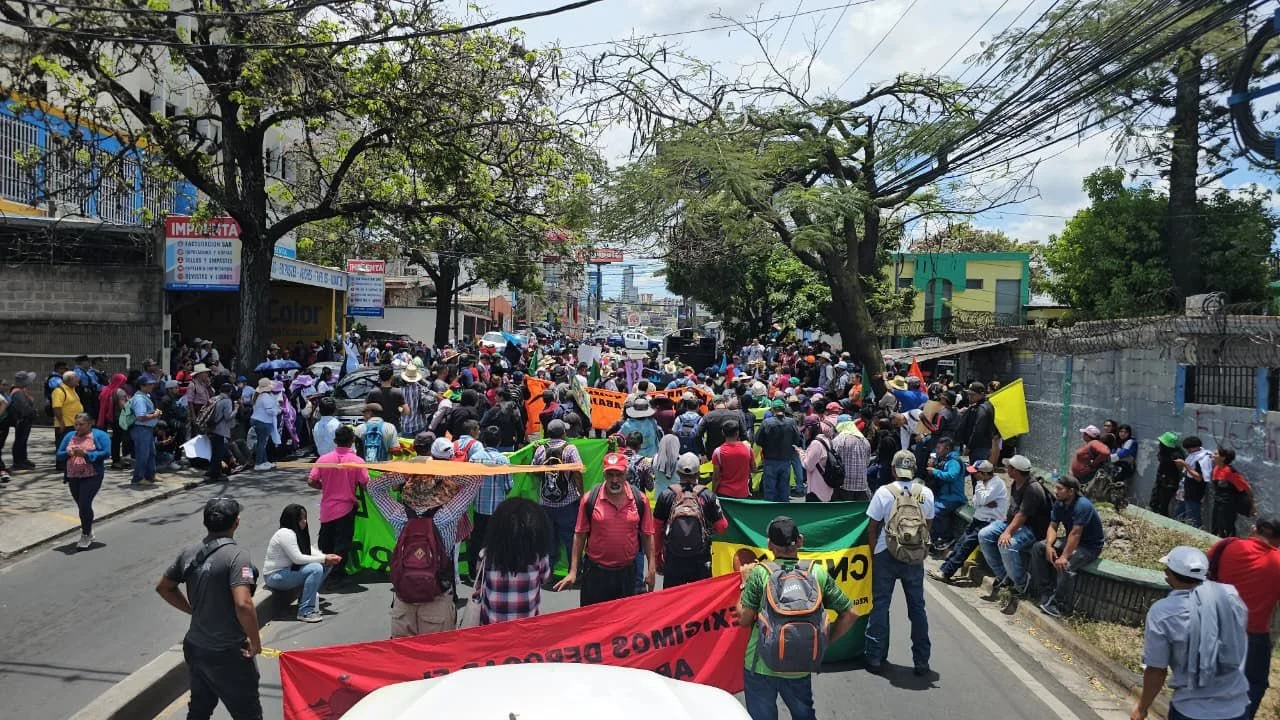
Image of popular demonstrations by Indigenous and campesino organizations in the capital city, Tegucigalpa. (Image Credits: Plataforma Agraria).
Tocoa, Colón.—During the month of April, violence against campesino families in the Bajo Aguán region intensified. Once again, the criminal group known as "Los Cachos" forcibly entered the farm belonging to the Tranvio Cooperative with the intent of attacking and displacing the cooperative's families. Members of this criminal group are already under investigation by the Public Prosecutor's Office for their role in the displacement of—and violence against—campesino families organized under the Agrarian Platform and the Coordinator of Popular Organizations of the Aguán (COPA).
Despite the severe threats facing campesino families, alternative ways of life remain possible through the strengthening of the organizational process in the Bajo Aguán. Toward the end of the month, a communal kitchen and community restrooms were installed, and blackboards were donated for the students of the local school established by the Tranvio, Camarones, and El Chile cooperatives. Despite facing constant violence, the organized campesino movement continues to show us that building collective ways of living is possible.
Latest News
International Day of Campesino Struggles: On April 17, more than 40 campesino and Indigenous organizations from Honduras mobilized toward Tegucigalpa and carried out actions at the National Congress, the National Agrarian Institute, and the Presidential Palace. The purpose of these actions was to present demands stemming from campesino and Indigenous territories; among these, they expressed concern regarding the Law for the Reactivation and Rehabilitation of the Agricultural Sector, the State of Honduras's return to ICSID, and the possible reactivation of the ZEDEs, among many other issues. Listen to some of these demands here.
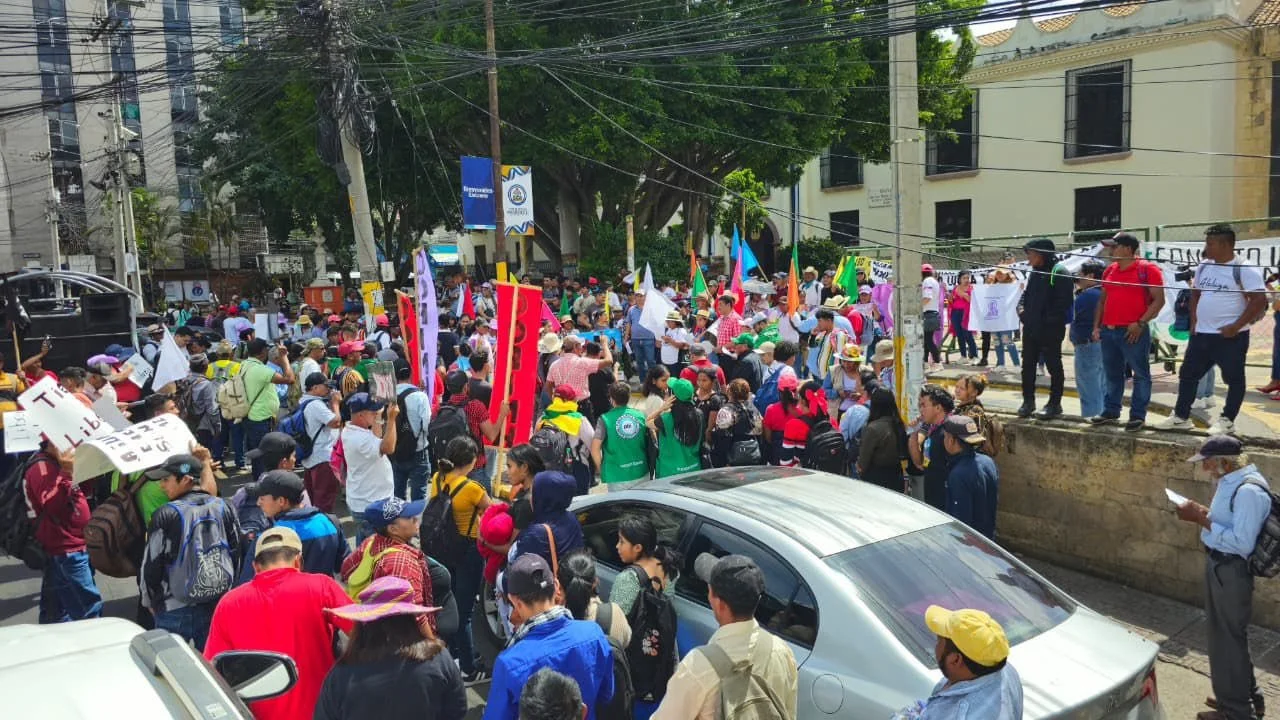
Image of the mobilization of Indigenous and campesino organizations in front of Congress. (Image Credits: Plataforma Agraria).
Solidarity with UNAH Students: On April 21, the Agrarian Platform and the Coordinating Body of Popular Organizations of the Aguán (COPA) expressed their full solidarity with students from the National Autonomous University of Honduras (UNAH) in their protest held in defense of the right to free, quality public education. Likewise, they strongly condemned the acts of repression and violence carried out on April 20, 2026, during peaceful demonstrations on the grounds of the National Congress; in particular, they denounced the violence inflicted upon Axel Medina, a student who lost an eye as a result of police repression.
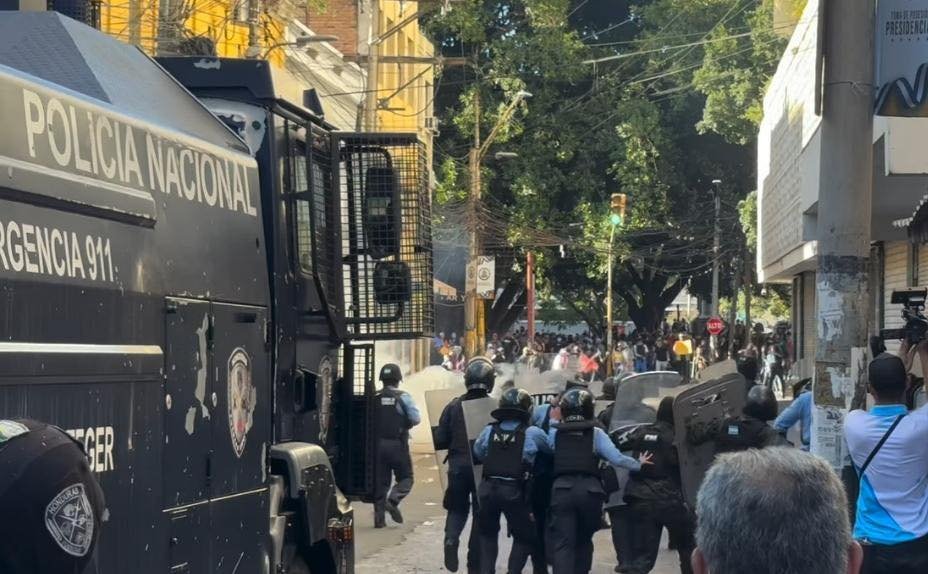
Police officers repress student demonstrations. (Image Credits: FRU UNAH).
UN Special Rapporteur Speaks Out : On April 23, the UN Special Rapporteur on Human Rights Defenders spoke out against the violence faced by the campesino families belonging to the “9 de Agosto” Cooperative. The Special Rapporteur reiterated the OHCHR’s call asking the State of Honduras to ensure a sustained and integral response to put an end to the pattern of violence and human rights violations in the region.
Lenir Pérez’s Hearing Suspended: The initial hearing scheduled for April 23, 2026, against Lenir Pérez—who is accused of aggravated damages and the illegal exploitation of natural resources within Carlos Escaleras National Park—has been suspended. The Municipal Committee for the Defense of Common and Public Goods of Tocoa demands that Lenir be held accountable before the law.
Tranvio Cooperative Under Attack: On April 26, the criminal group “Los Cachos” forcibly entered the premises of the Tranvio Cooperative with the intent to attack and displace the campesino families within the cooperative. The Agrarian Platform has denounced on multiple occasions that this criminal group is in the service of the DINANT Corporation.
Support for Campesino Cooperatives: On April 28, the Agrarian Platform announced United Nations support for the Tranvio, Camarones, and El Chile campesino cooperatives. The International Organization for Migration (IOM) donated hygiene kits and funded a project consisting of the construction of a communal kitchen and community restrooms. Additionally, the organization Save the Children—a partner of the Pan American Health Organization (PAHO)—donated whiteboards to the “Carlos Escaleras” School, the facilities for which had recently been built by the cooperatives. Watch an interview with Agrarian Platform spokesperson Yoni Rivas regarding the support provided by international organizations here.
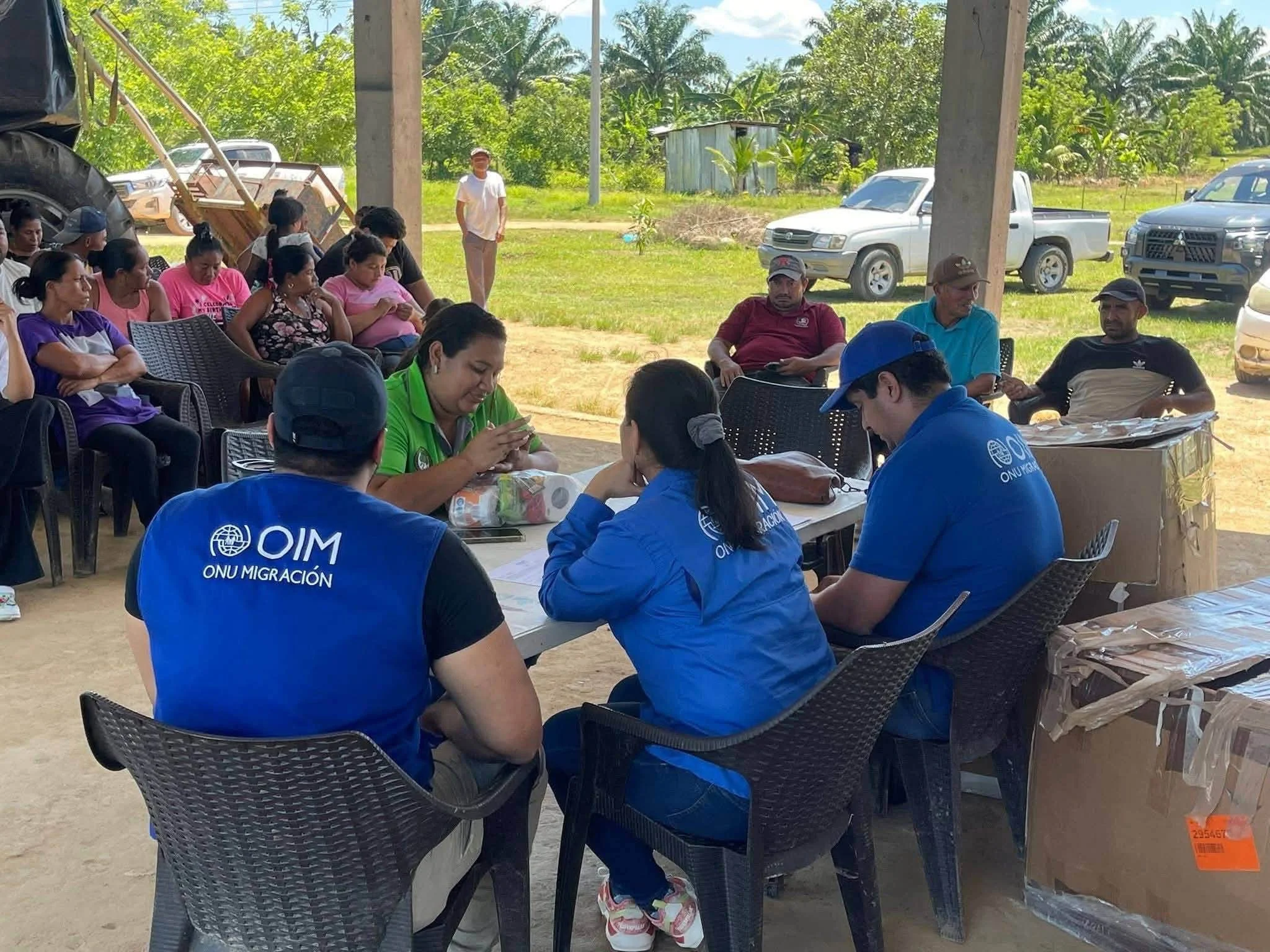
Meeting between IOM and the Agrarian Platform. (Image Credits: Plataforma Agraria).
Violence in the Community of Panamá: On April 29, shots from high-caliber weapons were heard in the community of Panamá. Shortly after, a young woman named Darixa Alemán was found dead. The Agrarian Platform demanded the presence of police and investigative authorities to safeguard the lives of the members of the Gregorio Chávez Campesino Associative Enterprise, as well as other residents of the surrounding communities.
Historical Context
In the 1990’s, World Bank-led structural adjustment measures transformed the Bajo Aguán region of north-east Honduras from one of the nation’s primary sources of fruits, vegetables and basic grains into an African palm oil monoculture destined for export to insatiable Global North markets. Over the course of this process, thousands of campesinos were dispossessed of their farms to make way for massive palm plantations, owned by a handful of Honduran elite.
Since then, campesino cooperatives have engaged in a multi-decade struggle to recover their land, suffering violent repression by corporate and state entities as a result. The immediate post-coup period was especially brutal, taking the lives of approximately 150 small farmers by 2014. In recent years, many more have been murdered, disappeared, and criminalized. The vast majority of these crimes remain in impunity.
