
Aguán News Alert | June-July 2026
Legislative Threats, Popular Resistance, and Continued Violence in the Bajo Aguán
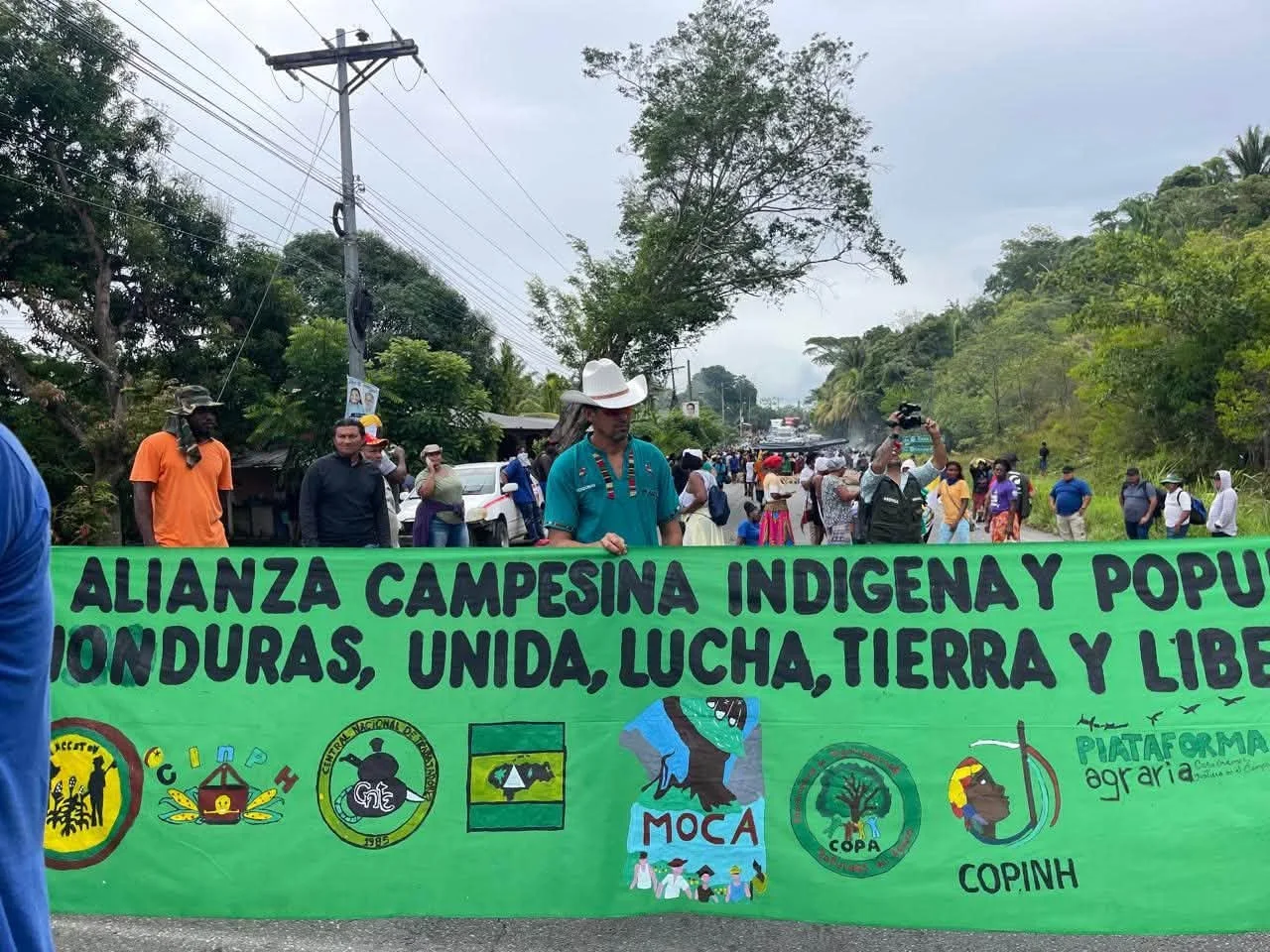
Tocoa, Colón. This June and July, the National Congress passed the “Law for the Strengthening and Protection of the Agro-industrial Sector” a law that could further risk campesino and Indigenous communities in the country. A sizable coalition of organizations mobilized against the law throughout these months and submitted legal challenges. These months also saw arrests in the investigation of the Rigores massacre, a delay in the trial of the material authors of Juan Lopez’s assassination, and additional mobilizations against a series of laws that are expected to criminalize protest and facilitate dispossession. On June 22, campesino leader Oscar Amilcar Alvarado Velasquez was murdered. On June 26, known organized crime leader Celio Rodriguez was arrested in connection to the murder of four people.
Latest News
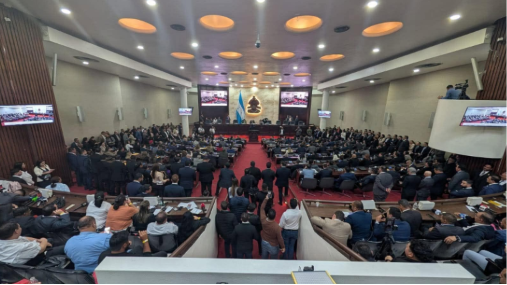
Congress Passes Law Privileging the Agroindustrial Sector: On June 1, a coalition of grassroots and civil society groups denounced that the National Congress was considering a bill entitled the “Law for the Strengthening and Protection of the Agroindustrial Sector of Honduras.” The coalition warned that the law unconstitutionally favors agroindustrial companies to the detriment of small producers and campesino communities. It risks weakening land rights, environmental protections, and the right to democratic participation. It could also facilitate further violence and dispossession in the Bajo Aguan. The National Congress passed the law on June 4, and further expanded the legislation’s protections to the energy and tourism sectors on June 8. The ranching industry is also protected by the law. See CESPAD’s analysis of the law.
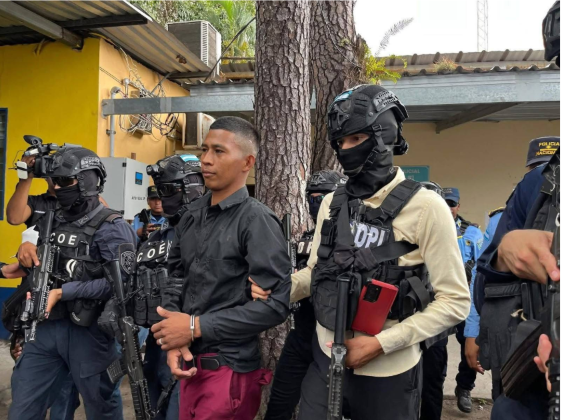
Arrest of People Connected to Rigores Massacre: On June 2, the National Police and the Technical Agency of Criminal Investigation (Agencia Tecnica de Investigacion Criminal - ATIC) captured an individual alleged to have been involved in the massacre of an estimated twenty people that occurred last month in the community of Rigores, located in the municipality of Trujillo, Colon. The detainee has been identified as Carlos Alexis Molina, alias “Gato Negro”, a 24-year-old ex-military officer, who per the order of a national jurisdiction judge will be held in pretrial detention. Molina is reported to have served in the Honduran military’s Special Forces, 15th Battalion, located in Río Claro, Trujillo, Colón. On June 5, the National Police made a second arrest. The detainee was identified as William Izaguirre. See CESPAD’s article on the massacre.
Trial Against Material Authors of Juan Lopez’s Murder Delayed: On June 11, media outlets reported that the trial of the material authors of the murder of environmentalist Juan Lopez was delayed to January 18-29, 2027. The delay was approved by the court upon request from the public prosecutor and the private complainants who needed more time to review and incorporate evidence. Three others, Adán Fúnez Martínez, Juan Ángel Ramos Gallegos, and Héctor Eduardo Méndez, considered the intellectual authors of the murder were charged on May 15, 2026 and are currently being held in pretrial detention.
Region Militarized Following Rigores Massacre: On June 15, media outlets reported that the Honduran government had surged military units, including Joint Task Force XATRUCH, to the Bajo Aguan to address criminal activity in the wake of the Rigores massacre. The reported objectives are to provide a security presence in Rigores and to dismantle the “Panamena” gang.
Law Privileging Agroindustrial Sector is Challenged: On June 16, a coalition of more than 217 grassroots and civil society organizations presented a preventive habeas corpus action at the Supreme Court of Justice that challenges Decree No. 107-2026, “Law for the Strengthening and Protection of the Agroindustrial Sector of Honduras.” Organizations warn that the law could facilitate forced evictions, increase the criminalization of land and environmental defenders while further debilitating protections for Indigenous and campesino communities.
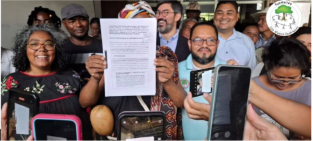
Killing of Campesino Leader: Oscar Amilcar Alvarado Velasquez, Secretary of the Suyapa del Aguan Campesino Cooperative was shot and killed on June 22 at approximately 8:20 a.m. He was sixty-six years old.
Release of Conflict Report: On June 23, CESPAD’s Socioterritorial Conflict Observatory released its 2025 annual report. The report documented seventy-seven conflicts across thirteen departments. The report noted that 20% of those documented are located in the Colon department. Violence associated with land disputes is responsible for close to 50% of cases documented.
Suspected Organized Crime Member Arrested: On June 26, ex-military officer Celio Bautista Rodriguez, 46 years old, was arrested in connection to two criminal processes related to the killing of four people. The Plataforma Agraria reports that starting in 2010 Bautista worked with active members of the Honduran police and military to infiltrate the Unified Campesino Movement of the Aguan (Movimiento Campesino Unificado del Aguan - MUCA), where they promoted the assassination of MUCA members and leaders. Bautista later founded a criminal organization that is suspected of having killed MUCA President Jose Angel Flores alongside Silmer George on October 18, 2016. Bautista is suspected of having had ties to the Honduran military’s Special Forces, 15th Battalion and the agroindustrial corporations in the region.
U.S. Congressmember on the Rigores Massacre: On July 1, media outlets reported that U.S. Congresswoman Rashida Tlaib proposed an amendment to the National Defense Authorization Act that would have called for the suspension of aid to Honduran security forces that are found to have been involved in the Rigores massacre. See also, article by ContraCorriente.
Law Privileging Agroindustrial Sector is Challenged Again: On July 1, a coalition of grassroots and civil society organizations once again challenged Decree No. 107-2026, “Law for the Strengthening and Protection of the Agroindustrial Sector of Honduras” this time through an amparo action at the Constitutional Chamber of the Supreme Court of Justice. The action further requested the immediate suspension of the law’s provisions that authorize evictions, pending resolution of the underlying claim.
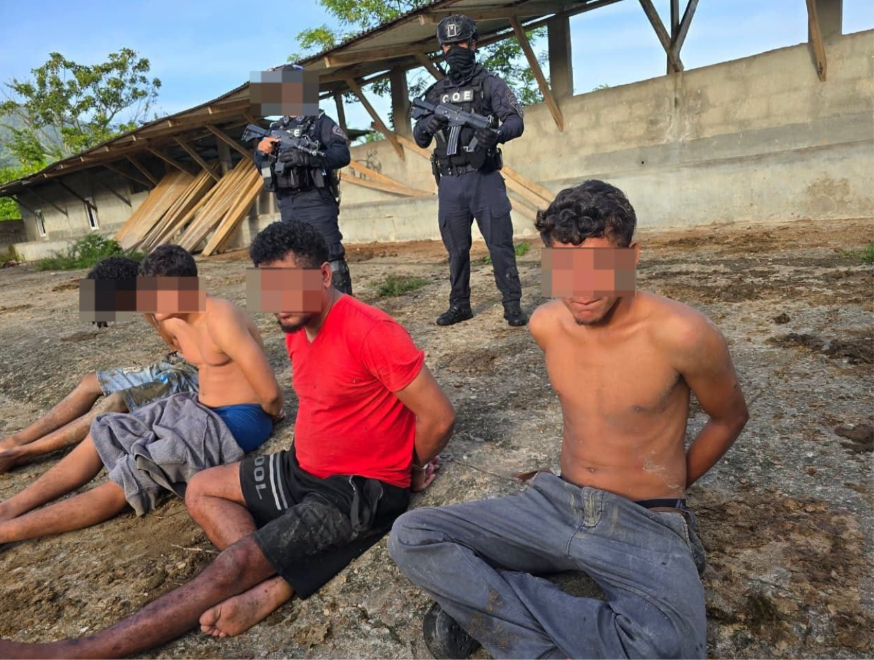
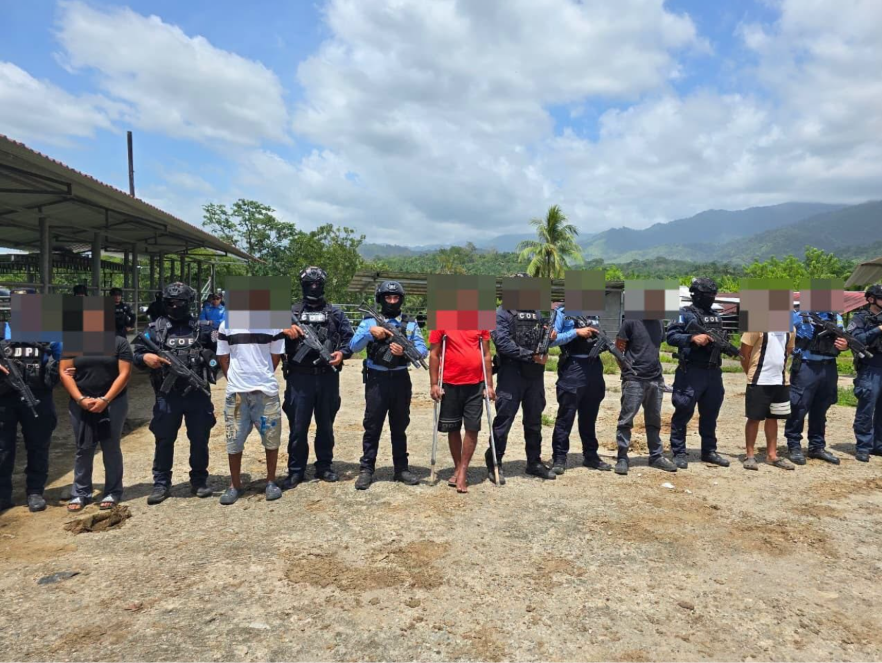
Arrest of Additional People Connected to Rigores Massacre: On July 7, the police arrested seven people that are suspected of belonging to the criminal structure “Los Canechos” and participating in the Rigores massacre. An additional suspect was killed in a confrontation with police.
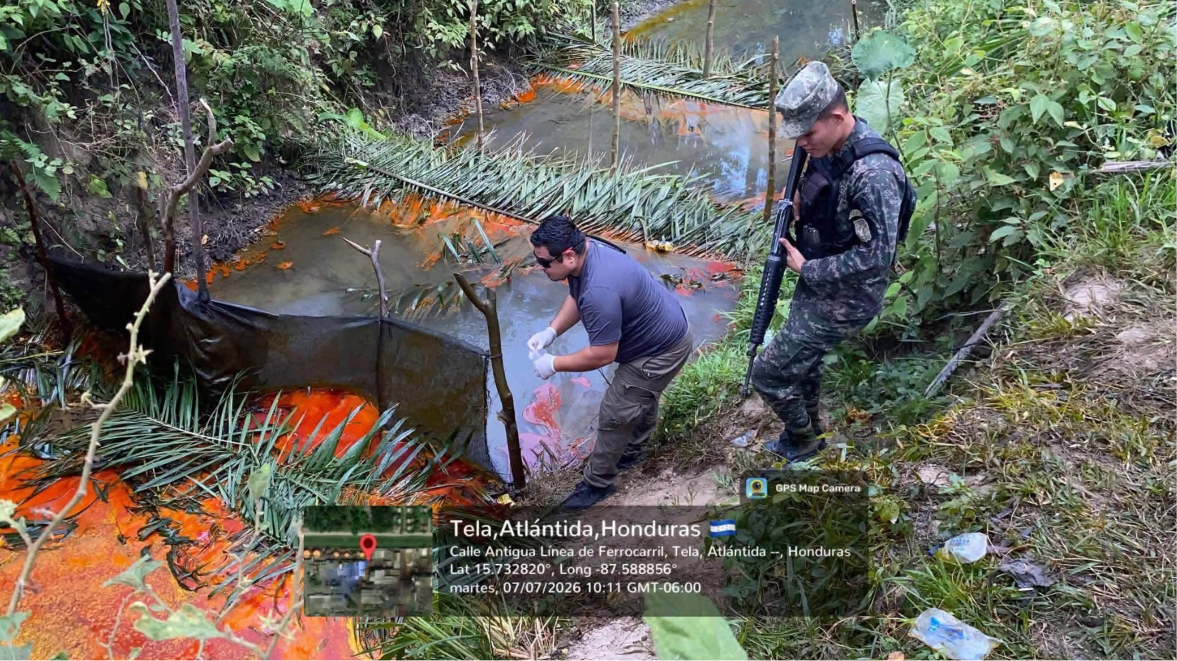
Agroindustrial Company Contaminates Vulnerable Waterways: On July 7, a media outlet reported that a body of water located in the community of San Alejo, Tela was contaminated by a chemical leak for which major agroindustrial company Grupo Jaremar is responsible. Government authorities reported that Grupo Jaremar’s industrial plant is located within the limits of the Blanca Jeannette Kawas Fernandez National Park, in a subzone designated for intensive use. The contaminated canal is connected to the San Alejo River, which flows into the Micos Lagoon, home to a protected ecosystem. Under Decree No. 107-2026, “Law for the Strengthening and Protection of the Agroindustrial Sector of Honduras” agroindustrial companies are exempt from certain environmental protections and sanctions.

Cooperative Member Arrested: On July 8, national police raided Maria Hilda Martel’s home and arrested her although the arrest warrant was for another person. Martel is a member of the Associate Campesino Company of Rigores in Trujillo and Women’s Campesino Network of the Aguan.
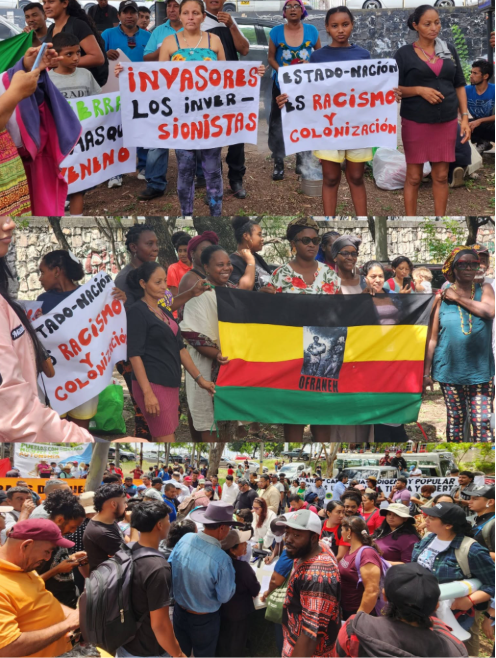
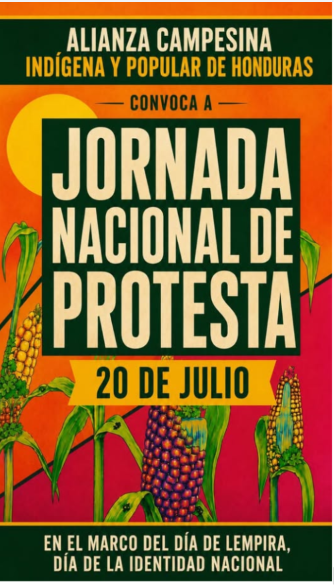
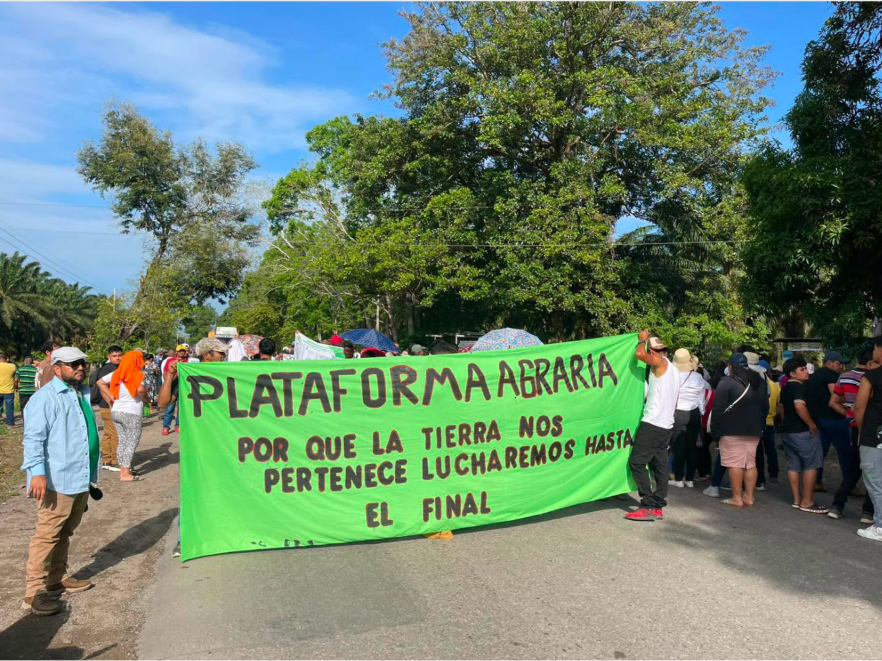
Lempira and National Identity Day: Grassroots and civil society organizations mobilized on July 20 in commemoration of the Day of Lempira and National Identity. Additionally, the Campesino, Indigenous, and Popular Alliance released a communique that recognized the continuation of a project aimed at displacing, criminalizing and persecuting social protest, and fuel extractive agroindustrial projects. The communique outlined a series of demands, including the derogation of Decree No. 107-2026, “Law for the Strengthening and Protection of the Agroindustrial Sector of Honduras” and other recently passed laws.
Supreme Court Admits Constitutional Challenge to Law Reforming the Crime of Terrorist Association: On July 24, the Constitutional Chamber of the Supreme Court of Justice admitted an unconstitutionality action brought by the Campesino, Indigenous and Popular Alliance. The challenge concerns Decree 84-2026, a law which reformed Honduras’ anti-terrorism laws and introduced a vague definition of terrorism that could be interpreted to encompass constitutionally protected forms of democratic participation. For further analysis of the reform, see CESPAD’s article 1 and article 2 on the subject.
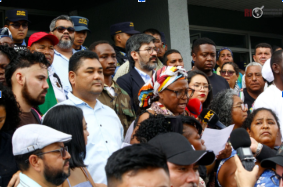
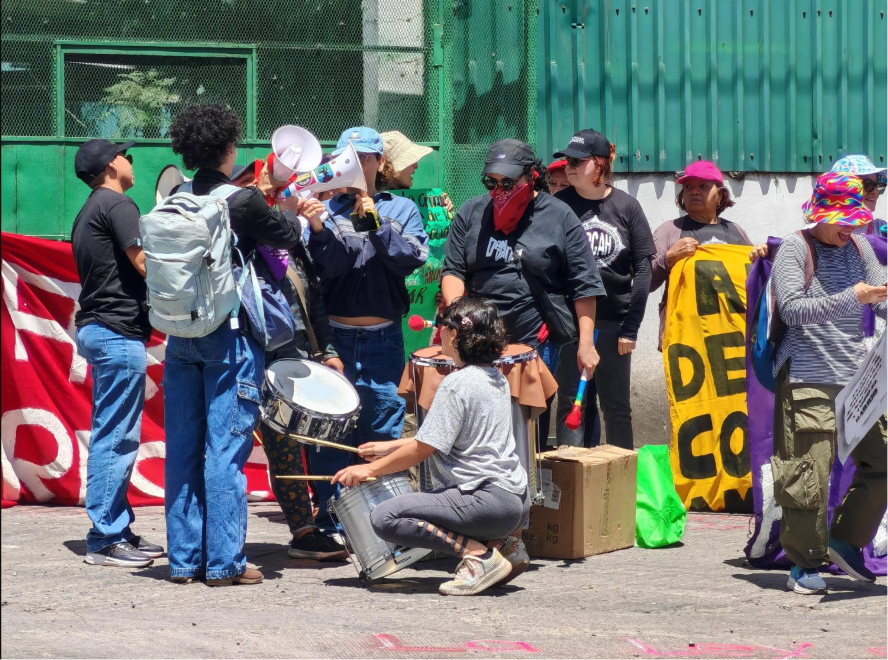
Petition for Impeachment of Congressmembers: On July 29, a coalition of grassroots and civil society organizations held a protest at the National Congress. There, the coalition submitted a petition, signed by 14,000 people, which called for the impeachment of the National Congress’ President José Tomás Zambrano Molina and other congressional representatives who were instrumental to the passage of Decree No. 107-2026, “Law for the Strengthening and Protection of the Agroindustrial Sector of Honduras.”
Historical Context
In the 1990’s, World Bank-led structural adjustment measures transformed the Bajo Aguán region of north-east Honduras from one of the nation’s primary sources of fruits, vegetables and basic grains into an African palm oil monoculture destined for export to insatiable Global North markets. Over the course of this process, thousands of campesinos were dispossessed of their farms to make way for massive palm plantations, owned by a handful of Honduran elite.
Since then, campesino cooperatives have engaged in a multi-decade struggle to recover their land, suffering violent repression by corporate and state entities as a result. The immediate post-coup period was especially brutal, taking the lives of approximately 150 small farmers by 2014. In recent years, many more have been murdered, disappeared, and criminalized. The vast majority of these crimes remain in impunity.
