
Aguán News Alert | May 2026
Threats to Social Movement Organizations after Rigores Massacre
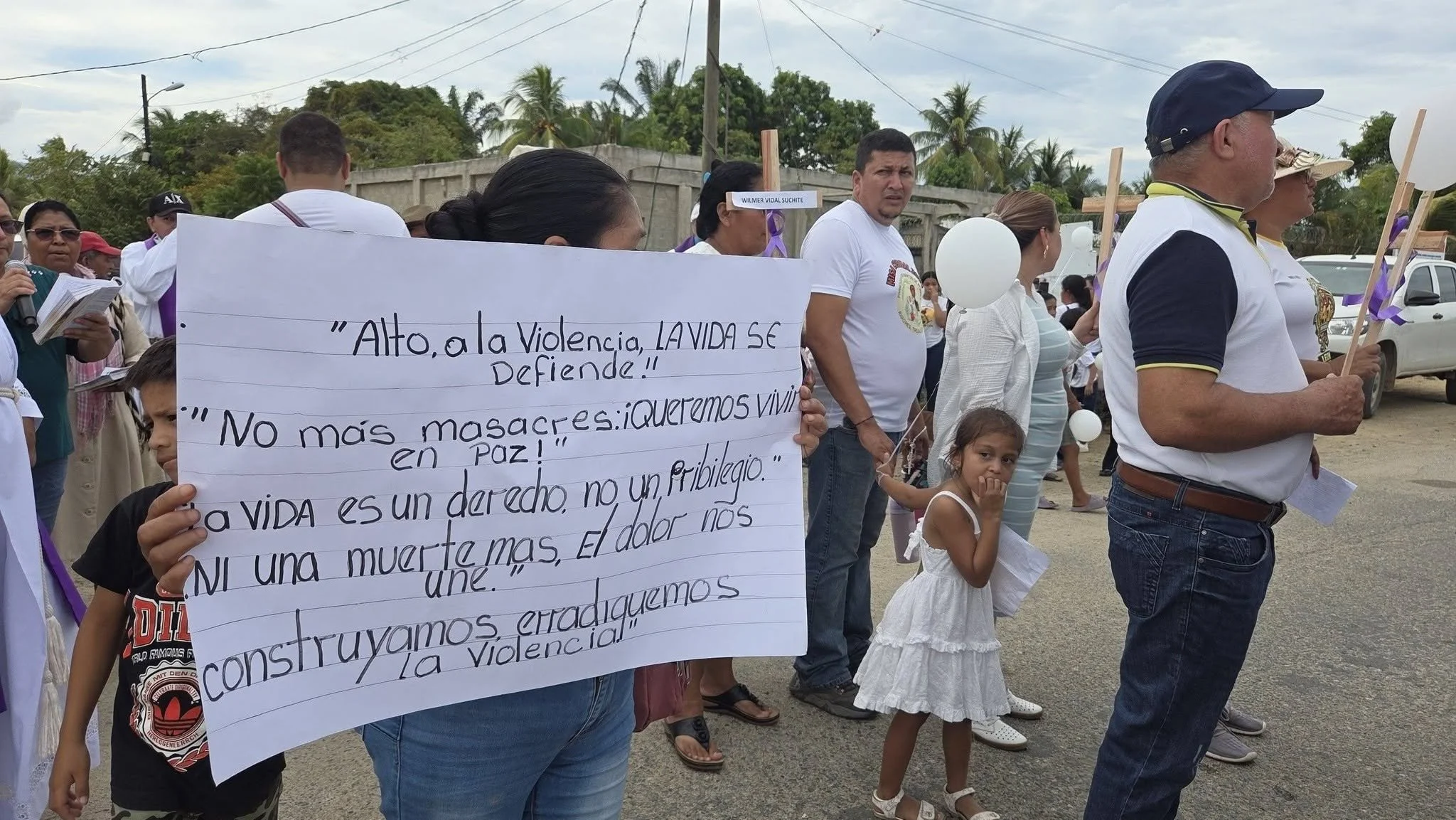
People march during the “Prayer Walk for Peace and Justice” led by the Catholic Church. (Photo Credit: Diario Colón).
Tocoa, Colón. Political unrest and conflict peaked the morning of May 21st with the massacre of community members in Rigores, Trujillo. The slaughter in the communities of Rigores and Panama was dismissed by mainstream media as conflict among campesino groups. The Agrarian Platform and the Coordinator of Popular Organization of Aguan (COPA), and other activist groups, held a press conference to condemn this narrative and to demand justice and public safety. In the midst of mourning, communities woke to a new reform to Legislative Decree 84-2026 which threatens their right to social and political mobilization.
Earlier in this month, campesino groups commenced International Worker Day with a mass mobilization. The event was not without its complications as participants faced harassment by criminal and official governmental groups. Nonetheless, participants marched for worker rights and justice for environmentalist Juan Lopez. There was also an important development in the Juan Lopez case. Three people, including a suspected intellectual author of the assassination, former mayor Adán Fúnez, were arrested. Lastly, after years of work the Carlos Escaleras Mejía School – serving the children of Cooperatives Chile, Tranvio, and Camerones – became accredited by the state of Honduras.
Latest News
International Day of Workers: This May 1st, was marked by protests for labor rights, criticism of the Presidential and congressional incumbents, and advocating for land rights. In Tocoa, union leaders and participants transporting sound systems were intercepted by government officials as they advanced to the capital and outside of the Bajo Aguan. In Yoro, the National Center of Field Workers (Central Nacional de Trabajadores del Campo – CNTC) coordinator, Lilian Borgas, was threatened and harassed by a group of unidentified men. This did not stop participants and organizers from mobilizing for workers rights and justice for murdered environmental activist Juan Lopez.
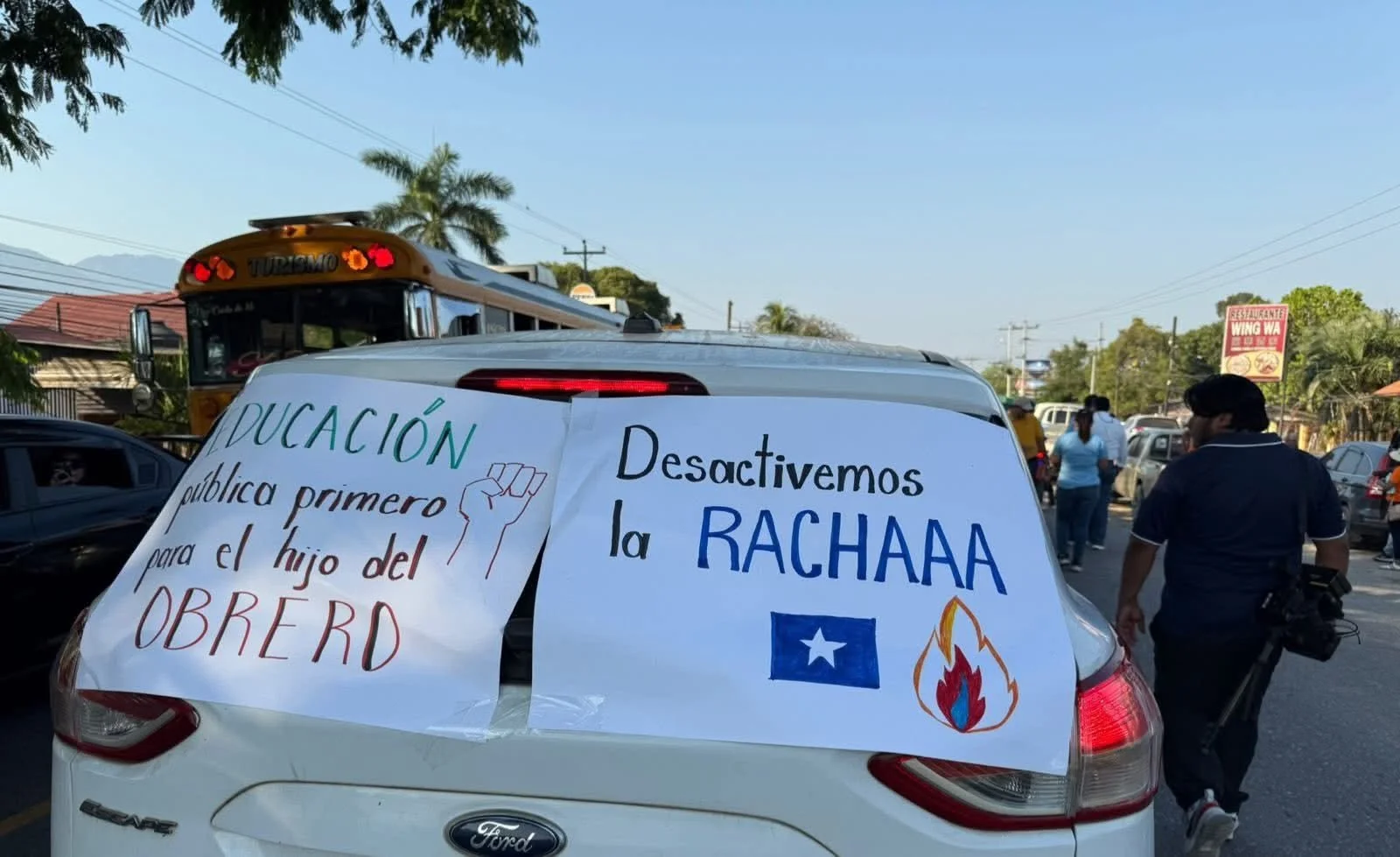
The government of Nasry Asfura is being denounced for not allowing sound equipment at demonstrations. (Photo Credit: Diario Colón).
Carlos Escaleras Mejía School Accredited: On May 5th, the school, responsible for 169 students from the Tranvio, the El Chile, and the Camarones Cooperatives, became accredited. The school has been an effort realized by the Agrarian Platform, cooperatives, the teachers, and families from these communities. Currently, the educational center offers classes to students from kindergarten through sixth grade, many of whom had abandoned the educational system.
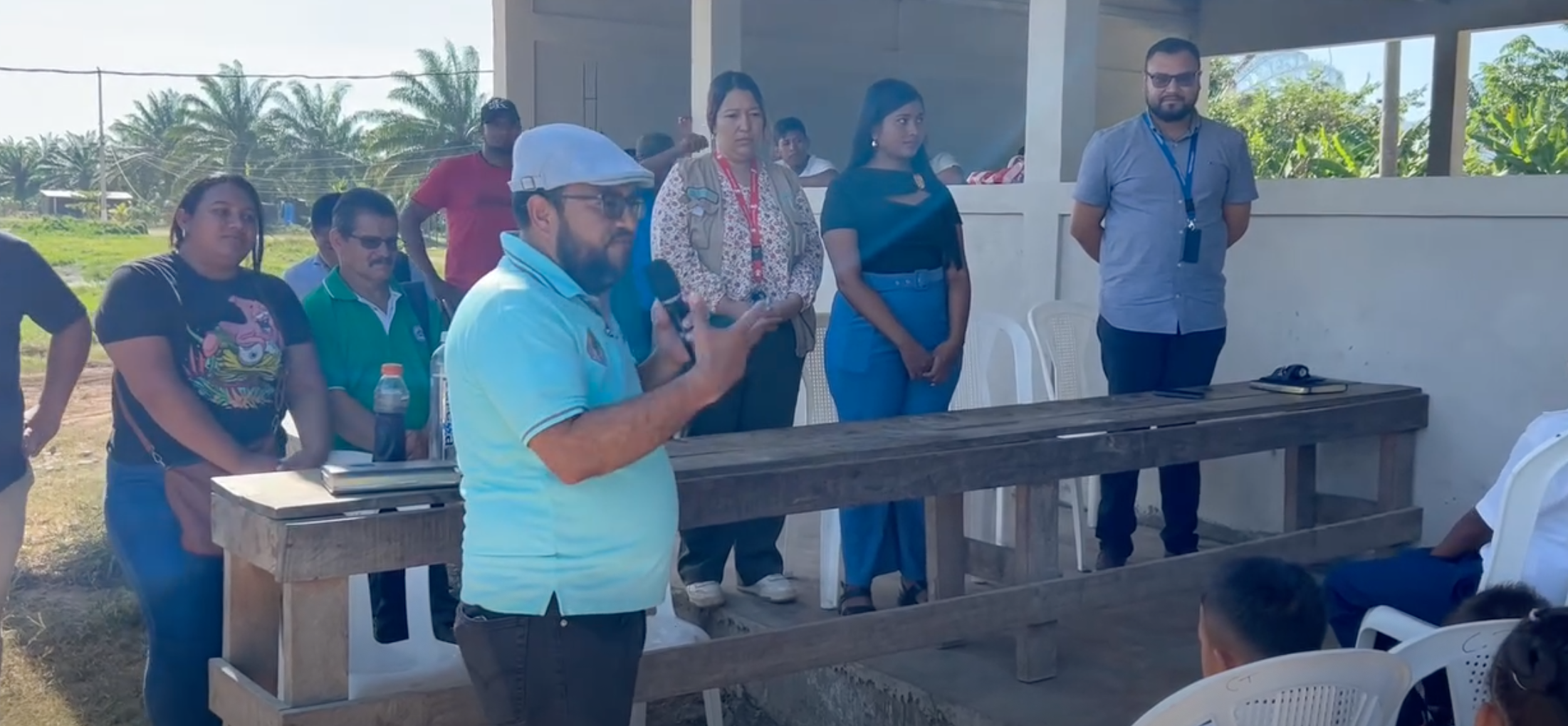
The Carlos Escaleras Mejia School is officially recognized. (Photo Credit: Radio Popular del Aguán.)
Former Mayor Adán Fúnez Arrested for Alleged Complicity in Juan Lopez’s Murder: On May 12, The Secretariat of Security announced that the ex-mayor of Tocoa, Adán Fúnez was captured and detained alongside two other individuals for their alleged involvement in the murder of environmentalist Juan Lopez. Arrested by the Technical Criminal Investigation Agency (Agencia Técnica de Investigación Criminal – ATIC), Adan Lopez and the two other men were transported to La Ceiba, Atlántida to face judicial proceedings. In a press conference, the Committee for the Defense of Common and Public Goods of Tocoa, presented a list of demands for the well being of their communities through the protection of common resources and the justice for Juan Lopez. On May 15, the initial hearing was held in the National Criminal Court with Jurisdiction in Matters of Organized Crime, Environment and Corruption against the three accused persons, where the judge issued a formal order of prosecution with a preventive detention measure.
Massacre in Rigores, Trujillo: At 6am on May 21st, men, women and children were killed in Rigores, in the department of Colon. The 24 victims consisted primarily of Panama and Rigores community members, who had been targets of two criminal groups, Grupo del 8 and Los Canechos, since May 2025. The majority of the victims were members of the Campesino Movement of Rigores, Trujillo, and several of them had previously reported the National Police as responsible for inciting violence in the Rigores community. Despite the victims' statements pointing to members of the National Police, Security Minister Gerson Velasquez blamed campesino organizations – who claim the right to land – for the massacre. The Agrarian Platform refuted this narrative, which seeks to criminalize the campesino movement and divert attention from the events denounced by the victims themselves.
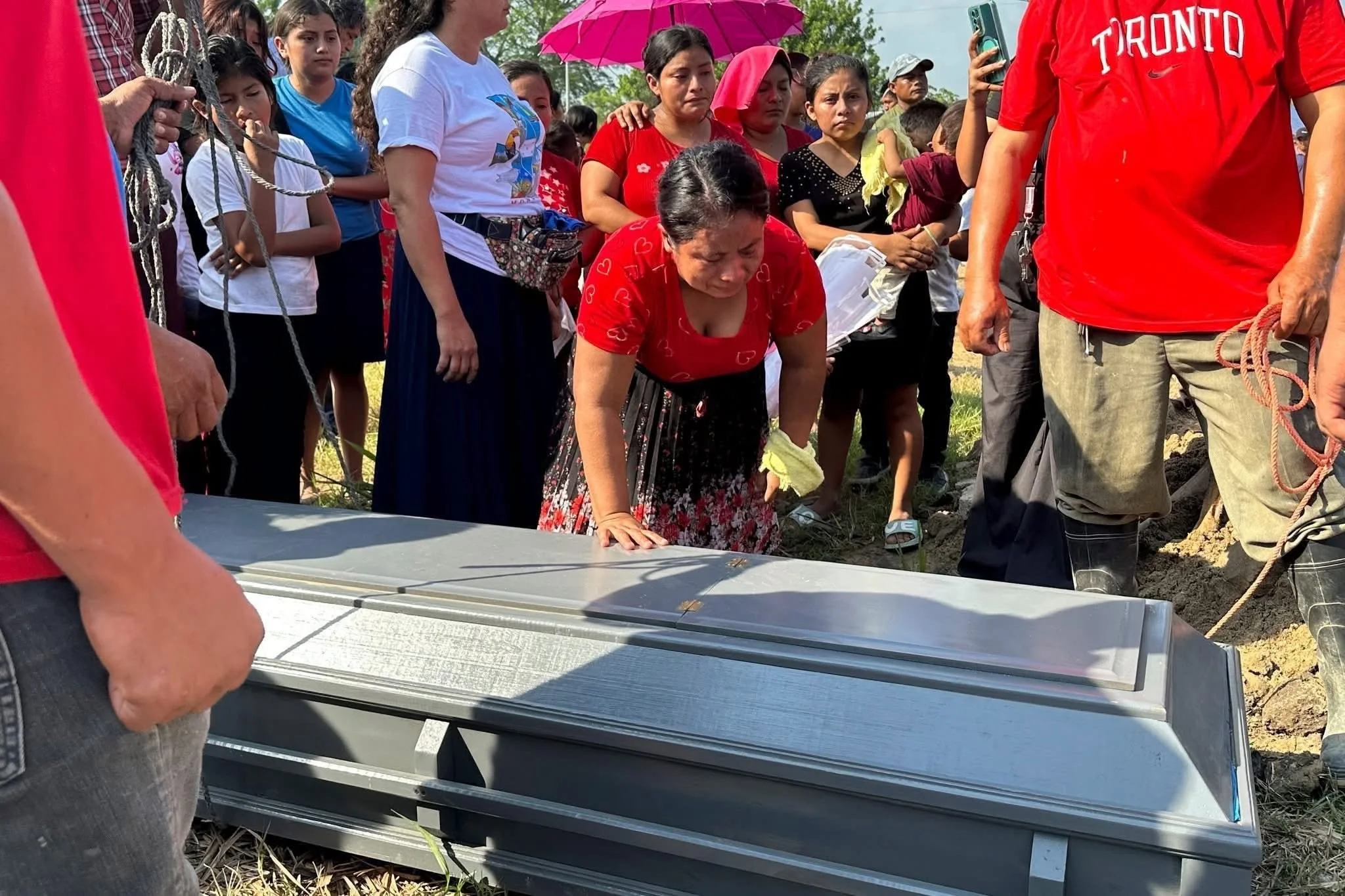
Families bury their loved ones, victims of the Rigores massacre. (Photo Credit: Diario Colón).
The Agrarian Platform also denounced the army's past facilitation of land transfers, including in the area where the massacre occurred, to criminal groups and its assistance to the Dinant Corporation in maintaining its illegitimate land tenure. On May 27, the Agrarian Platform and the Coordinator of Popular Organizations of the Aguán (COPA)—in a meeting with the Office of the United Nations High Commissioner for Human Rights and the Minister of Human Rights—emphasized the need for a thorough investigation into the events of the May 21 massacre in Rigores, Trujillo, including the criminal structures behind it. They also called for the intervention of trained public security forces to protect the population, with international oversight. On May 29, the Catholic Church held a “Prayer Walk for Peace and Justice” in solidarity with the victims' families.
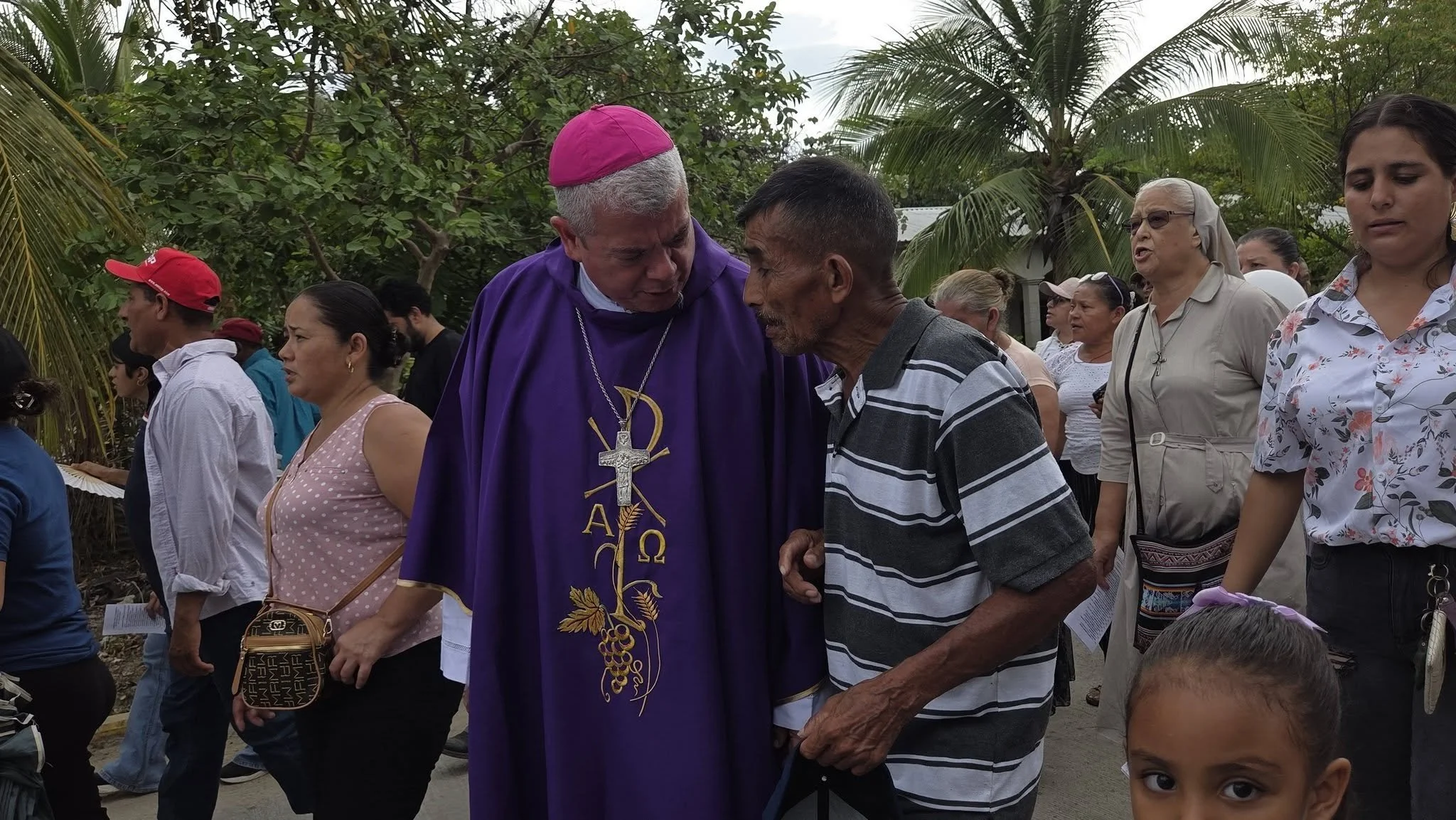
Bishop Jenry Ruiz accompanies the victims' families on the "Prayer Walk for Peace and Justice." (Photo Credit: Diario Colón.)
Reforms to the ‘Associated Terrorist’ Offense: On May 28, members of the Coordinator of Popular Organization of Aguan (COPA), Agrarian Platform, and Campesino, Indigenous, and Popular Alliance of Honduras (ACAINP) presented a petition for the declaration of partial unconstitutionality against Legislative Decree No. 84-2026, which make important reforms to the crime of “terrorist association.” The reform is unconstitutionally broad and vague such that it could be interpreted by authorities to criminalize the legitimate human rights work of social, Indigenous, and campesino organizations. Furthermore, many activist groups criticize the timing and efforts to pass the reform when no official investigation on the May 21 massacre in Rigores, Trujillo had been announced at the time. Catholic Bishop Jenry Ruiz spoke out against Decree 84-2026, noting that the approval of said law is "treason against the homeland and the interests of the Honduran people" since it legalizes the regime of privileges for large agribusinesses.
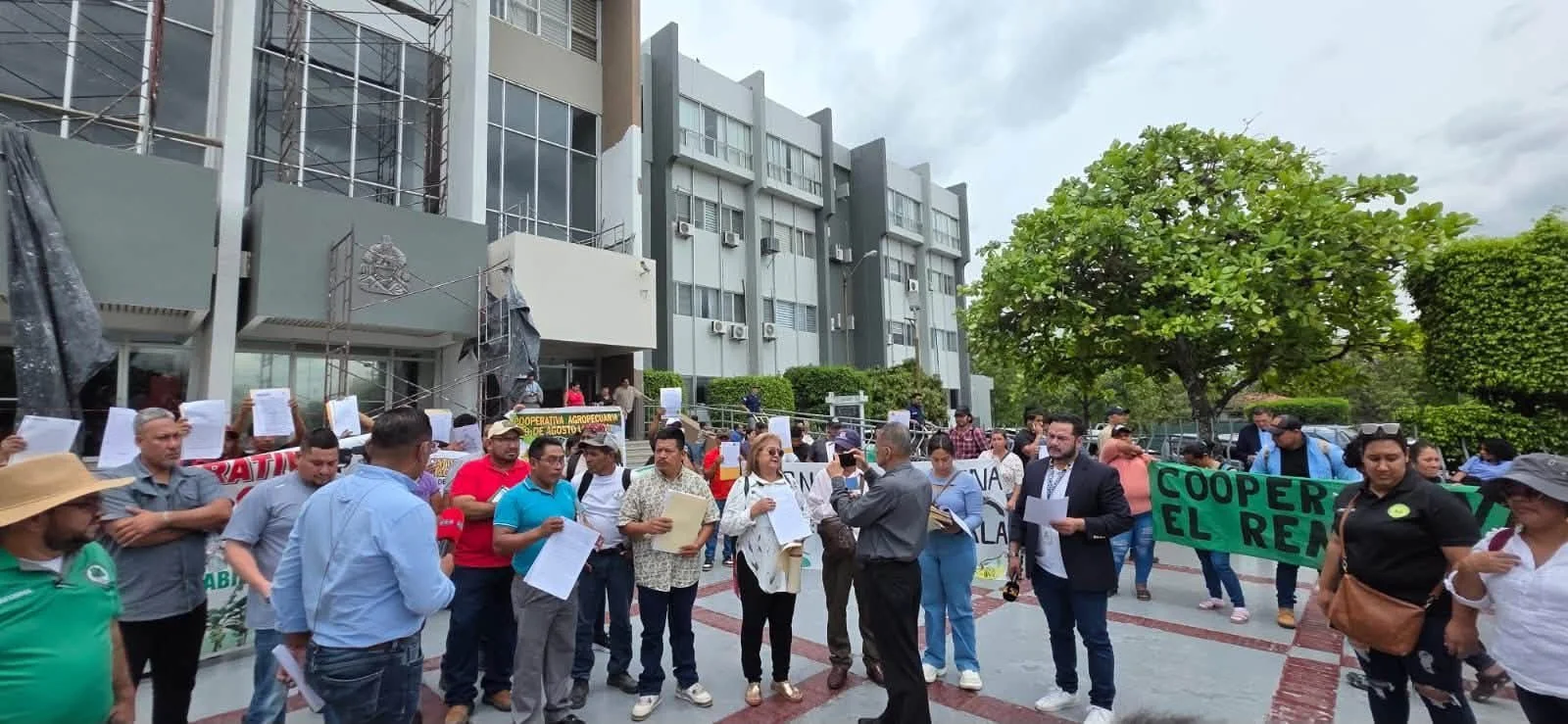
Members of ACAINP file a constitutional challenge. (Photo Credit: Plataforma Agraria).
Historical Context
In the 1990’s, World Bank-led structural adjustment measures transformed the Bajo Aguán region of north-east Honduras from one of the nation’s primary sources of fruits, vegetables and basic grains into an African palm oil monoculture destined for export to insatiable Global North markets. Over the course of this process, thousands of campesinos were dispossessed of their farms to make way for massive palm plantations, owned by a handful of Honduran elite.
Since then, campesino cooperatives have engaged in a multi-decade struggle to recover their land, suffering violent repression by corporate and state entities as a result. The immediate post-coup period was especially brutal, taking the lives of approximately 150 small farmers by 2014. In recent years, many more have been murdered, disappeared, and criminalized. The vast majority of these crimes remain in impunity.
